


New here? Start with the post the whole publication grows out of → One Planet, 180 Currencies. Something’s Off.
Whenever prices climb, the conversation sounds the same. People are angry. Politicians point fingers. The news blames “the economy,” or greedy companies, or some far-off war.
And almost everyone treats it like the weather. Like bad luck. Something that just... happens to all of us, more or less equally.
But heres the question nobody stops to ask: if your money is losing its value where is that value actually going?
Because it doesn’t evaporate. Inflation never destroys value. It moves it - quietly, invisibly, out of one set of hands and into another. And for every single person made poorer when prices rise, someone, somewhere, is being made richer.
So lets do the thing the headlines never do. Lets follow the money, and find out who’s really on the winning side.
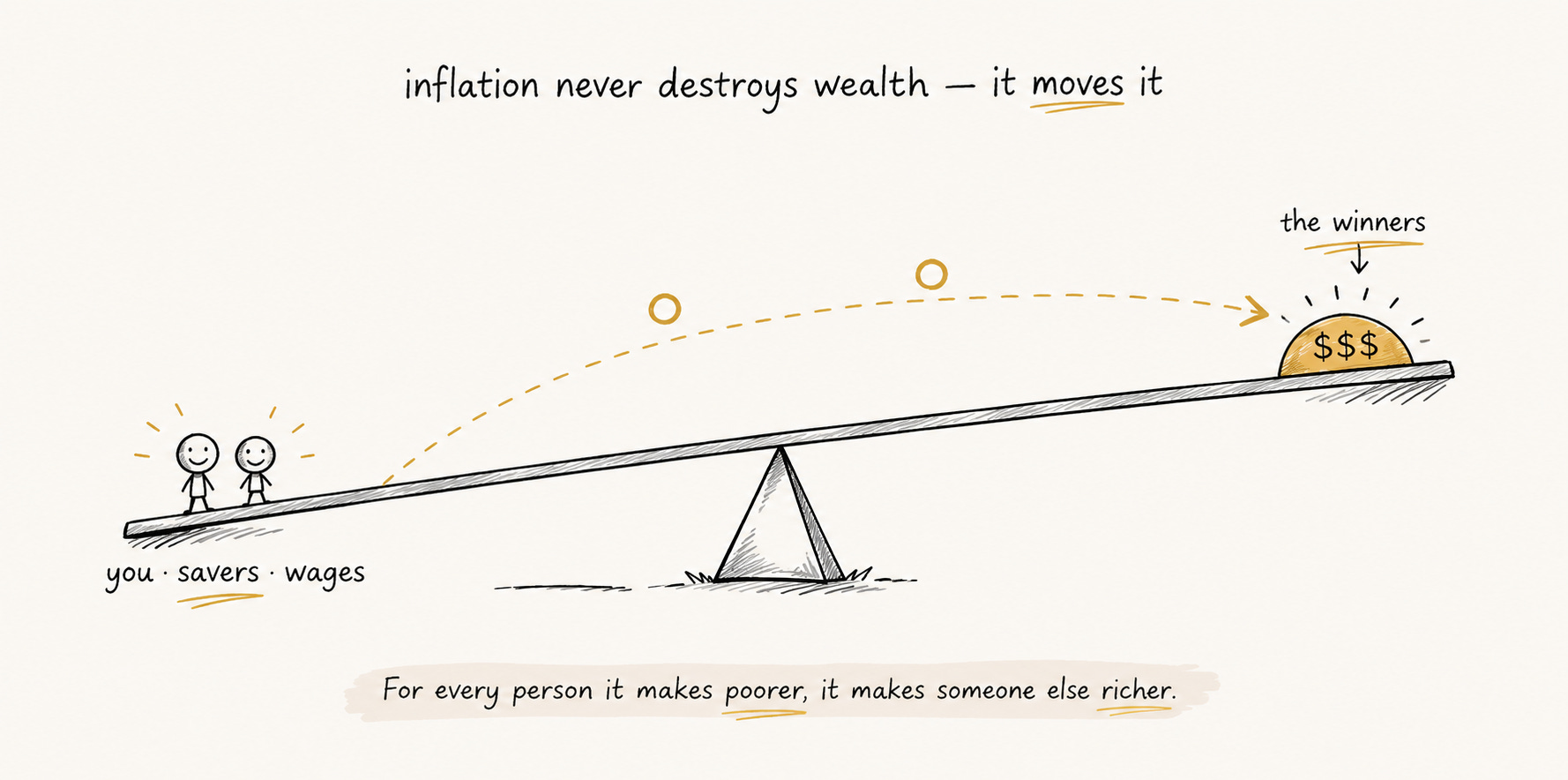
One idea before we start, because its the key to everything that follows: inflation is not neutral. It was never neutral. It is one of the largest, quietest transfers of wealth on the planet and the reason it survives, decade after decade, is that the people it quietly enriches are exactly the people with the power to keep it going. Stay with me. This’ll change how you read every price tag for the rest of your life.
Winner #1 - The biggest borrower who ever lived
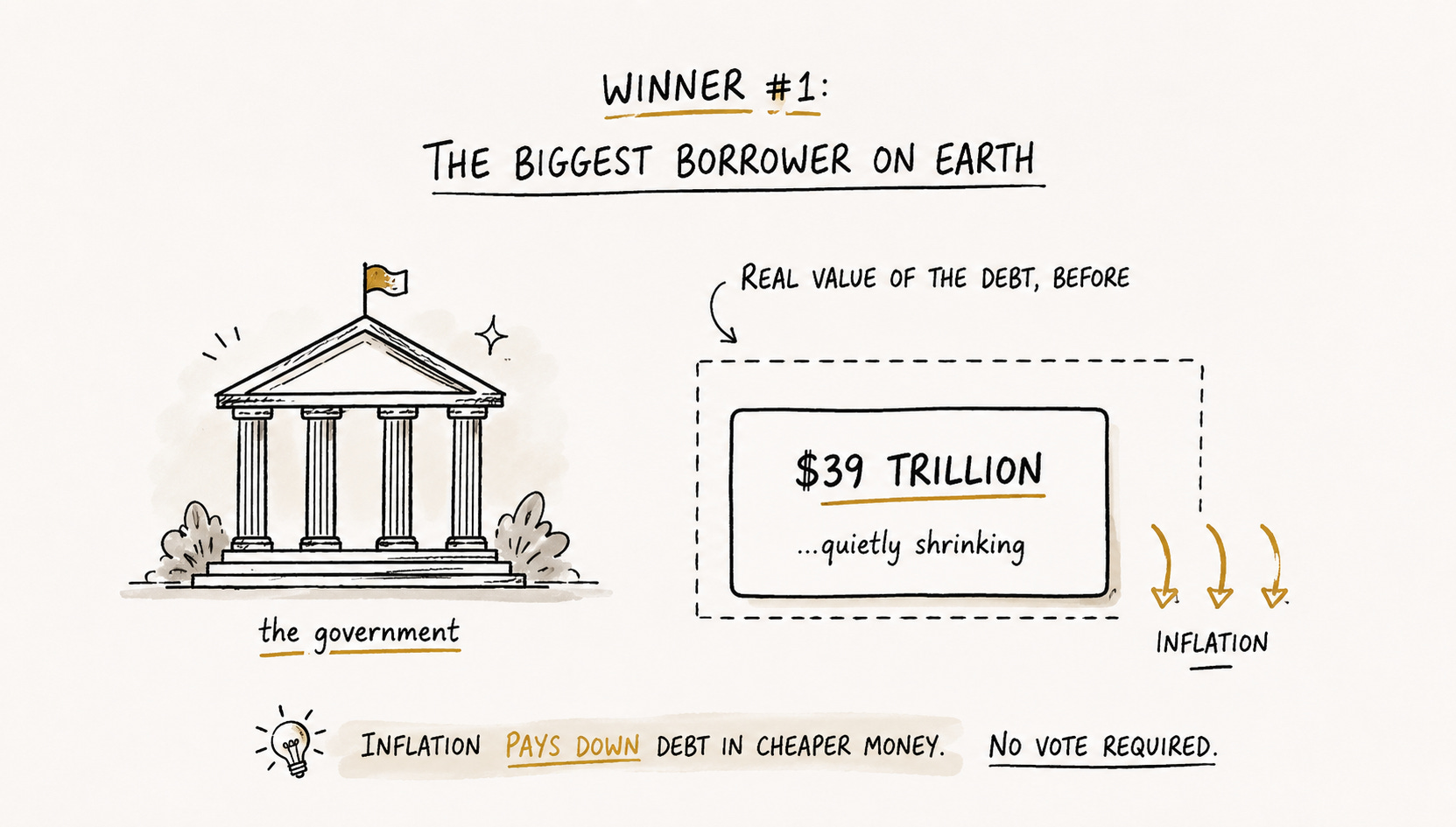
Start with the single biggest winner of all. Not a person. A government - almost any government.
Heres why. Governments are the largest borrowers on earth, and they owe staggering, almost unimaginable amounts of money. As I write this, the United States alone owes more than $39 trillion - a number climbing by roughly five billion dollars a day. And nearly every major country is carrying record debt of its own.
Now ask what inflation does to a debt. If you owe a fixed amount, and money slowly loses its value... your debt gets lighter. You borrowed in expensive money and you repay in cheap money. Inflation is, very quietly, the easiest method ever invented for a government to shrink what it owes without raising a single tax, passing a single law, or anyone really noticing.
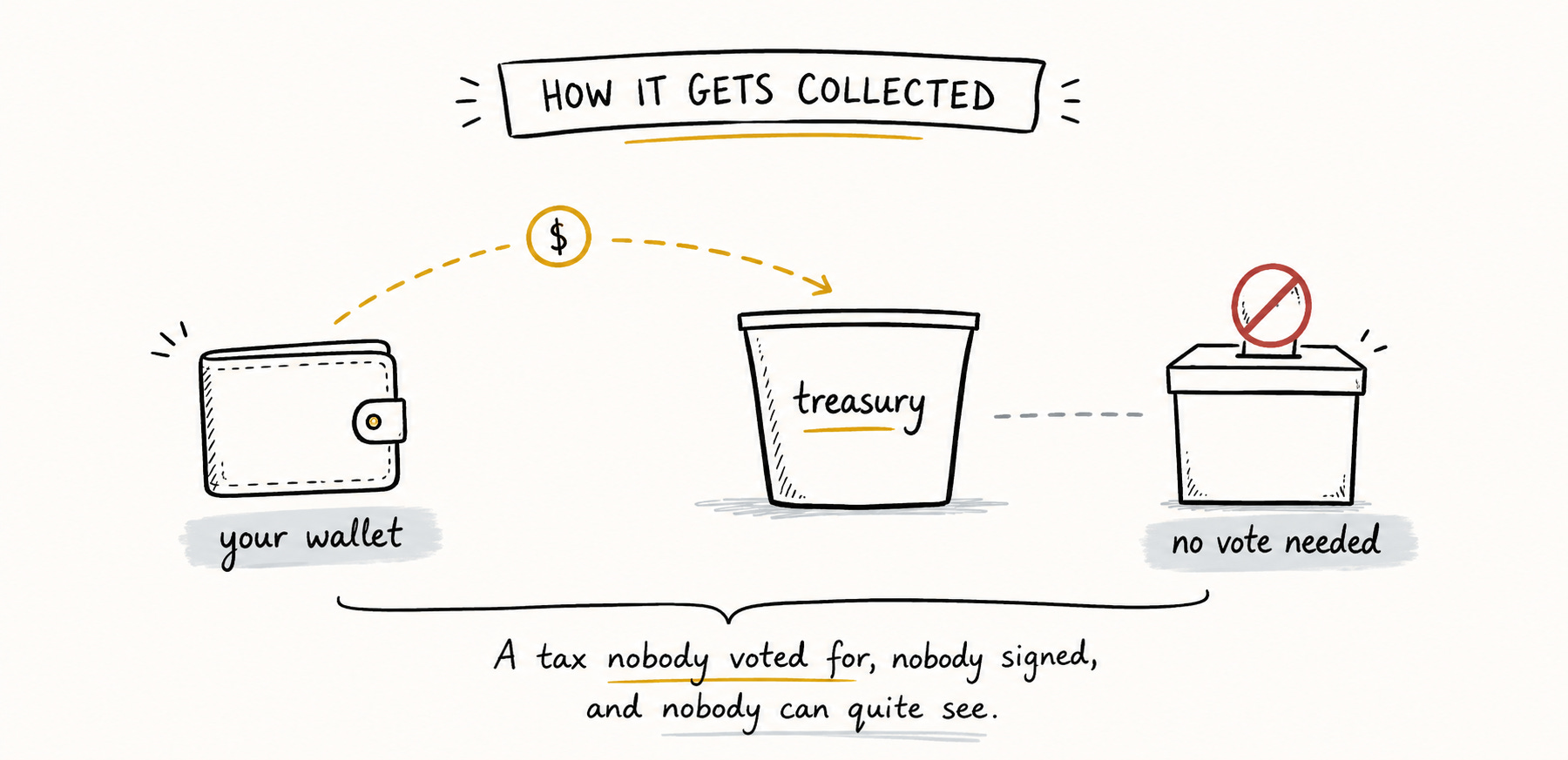
And it goes further than that. Inflation is itself a kind of tax - the cleverest one in existence. As prices and wages drift up, people get nudged into higher tax brackets and hand over more, even though they’re no richer in real terms. So the government collects more, spends more, and shrinks its debt, all at the same time. The economist Milton Friedman put it perfectly decades ago: inflation is “taxation without legislation.” A tax nobody voted for. Nobody signed. And almost nobody can see.
Winner #2 - Anyone who owes at a fixed rate
That same trick isn’t reserved for governments. It works for ordinary people too as long as you happen to be on the right side of it.
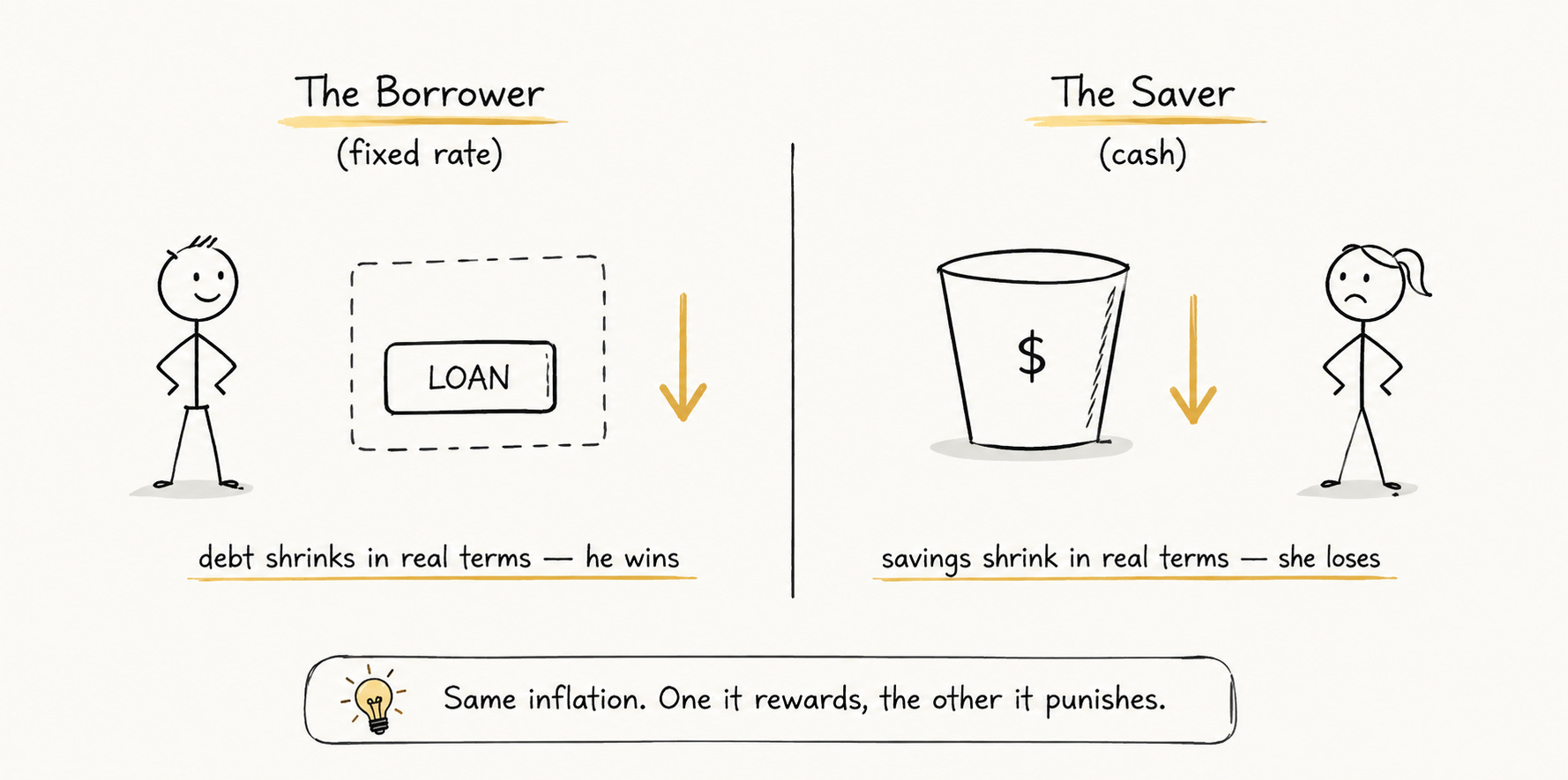
If you owe money at a fixed rate - a fixed-rate home loan is the classic example -inflation is quietly working for you. The debt stays the same number, but every year that number means less in real terms, while your wages and the value of the thing you bought tend to drift upward around it. You end up repaying tomorrow’s loan with money worth less than the money you borrowed.
Now flip it around. If you’re the saver - the careful one, who did the “responsible” thing and kept their money safe in cash - inflation is working against you with exactly the same force. Your pile of cash keeps its number and quietly loses its value. The borrower and the saver live through the identical inflation. It rewards one and punishes the other.
Winner #3 - The people who already own things
Heres where it starts to feel genuinely unfair because this is the winner that quietly pries open the gap between the wealthy and everyone else.
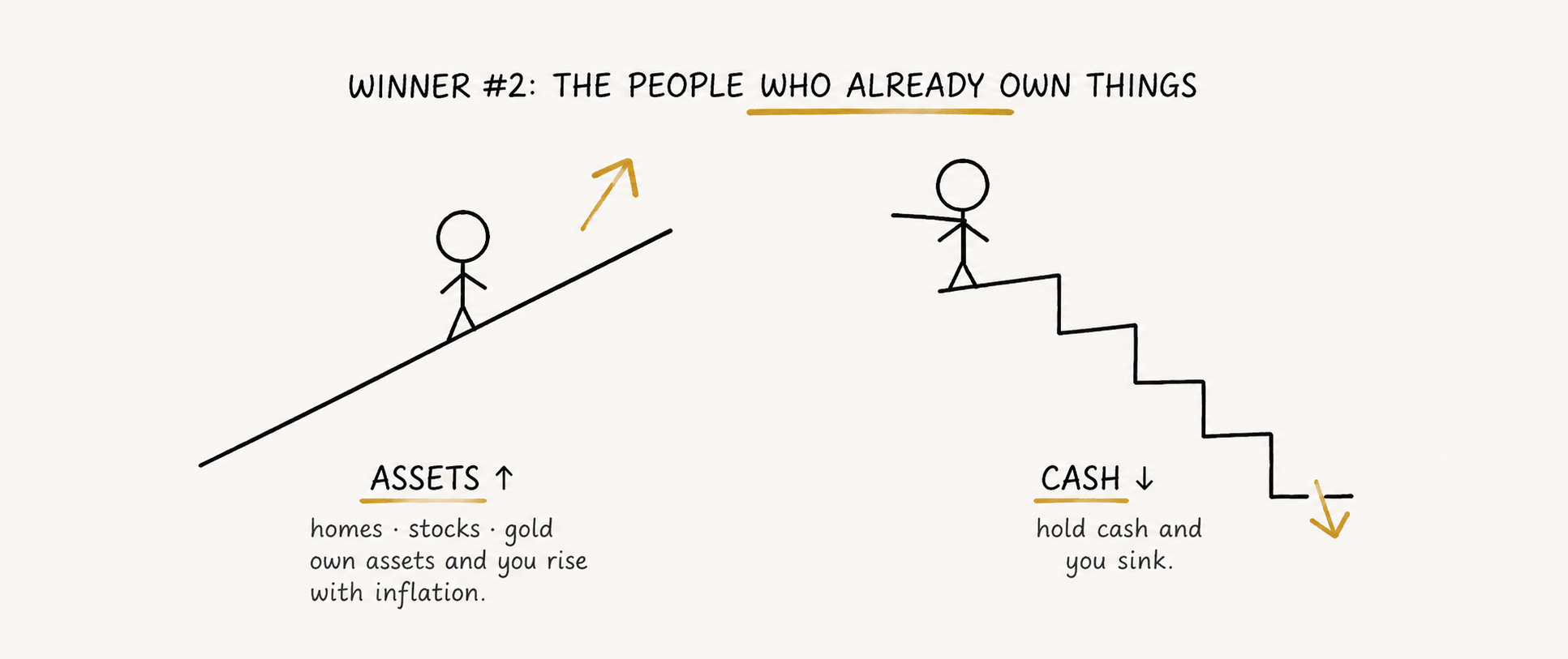
When money loses value, the things money buys tend to rise in price. Houses. Stocks. Land. Businesses. Gold. So if you already own those things, inflation doesn’t hurt you - it inflates your net worth. Your assets float up on the very same tide thats sinking everyone’s cash.
Picture two people who start in the same place. One owns a home and a basket of stocks. The other rents, and keeps their savings in the bank. Inflation arrives. The first person’s assets rise; the second person’s cash shrinks. Nothing else happened -inflation alone pushed them apart. One was standing on an escalator going up. The other, on a staircase going down.
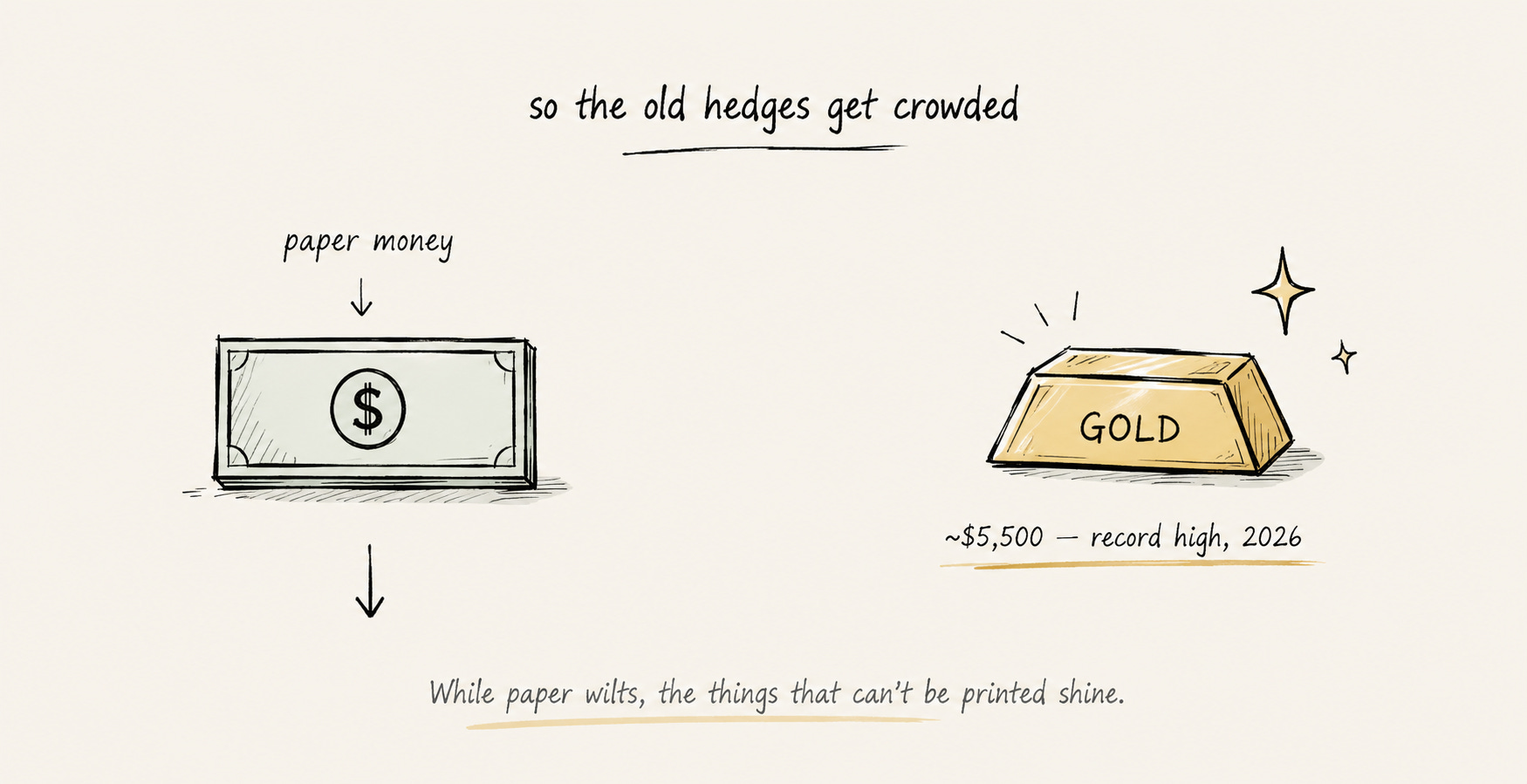
And you can watch this happening in real time, right now. Through 2025 and into 2026, as inflation flared back up partly from an oil shock after war broke out with Iran - investors stampeded into the one asset nobody can print: gold. It tore through every record in history, past $5,500 an ounce, after climbing more than 60% in a single year. Thats not a coincidence. Thats what it looks like when people with money rush to protect it from a currency thats quietly losing value and the ones who already held gold got richer simply by standing still.
Winner #4 - Whoever touches the new money first
This last winner is the most invisible of all and once you see it, you can’t un-see it. It even has a name. Economists call it the Cantillon effect, after the man who first described it three centuries ago.
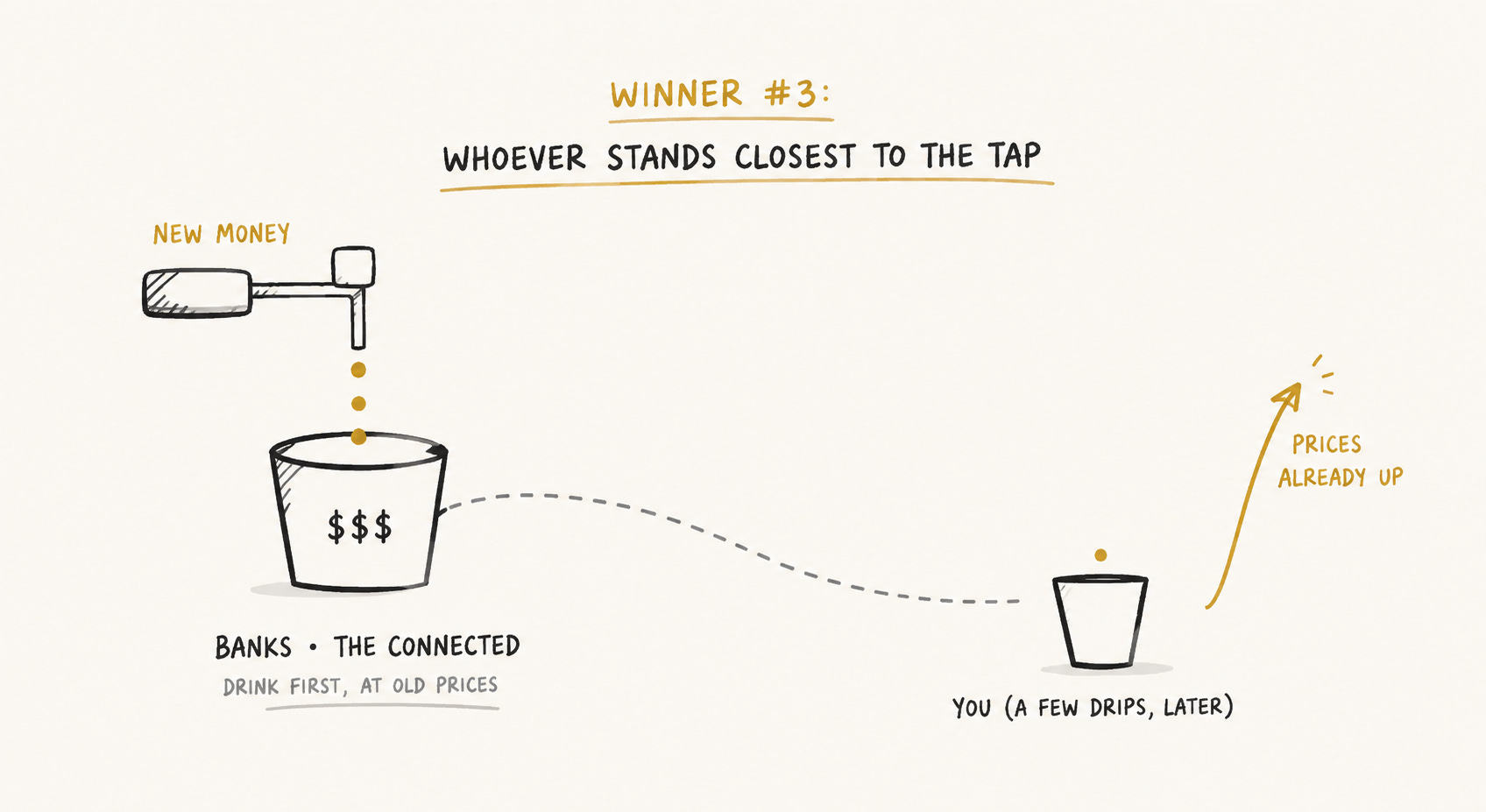
Heres the idea. New money doesn’t reach everyone at the same instant. It enters the economy at specific points through big banks, financial markets, government spending, large corporations near the spigot. And whoever gets that fresh money first gets to spend it while prices are still low. They buy assets, settle bills, place their bets all at yesterday’s prices. Only later, once that money has rippled out through the system, do prices climb for everyone else.
So by the time the new money finally trickles down to your wages and your bank account, the higher prices it created are already sitting there, waiting for you. The people closest to the tap drink first, and they drink clean. The rest of us are stuck at the far end of the pipe, catching a few drips - long after the water has already turned the prices up.
So who actually pays?
By now you can probably name the losers yourself, because they’re just the mirror image of every winner above.
Savers, whose cash quietly bleeds value. Lenders and pensioners, repaid in money worth less than they were promised. And above all, the people who live on a paycheck because wages are almost always the last thing to rise, and they rarely rise enough.
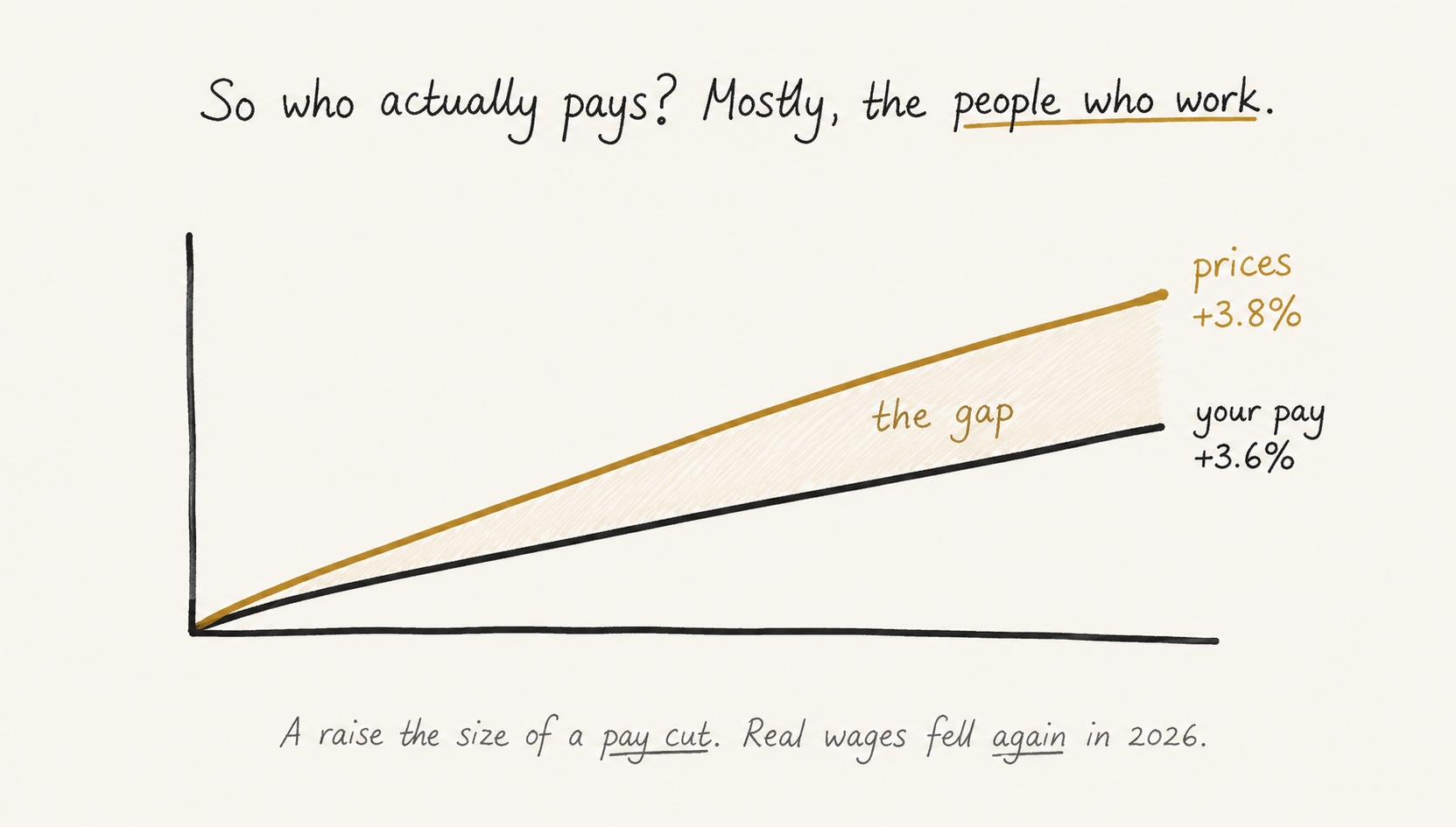
This isn’t abstract. In the year to early 2026, the average paycheck grew about 3.6%, while prices rose about 3.8%. Read that again. A “raise” that, after inflation, was actually a quiet pay cut. Tens of millions of people felt like they were working just as hard, earning more on paper... and slipping backwards anyway. Because they were.
And heres the cruelest part of the whole thing. Inflation hits the people with the least, the hardest. If you’re wealthy, most of your money lives in assets that rise with inflation. If you’re not, most of your money sits in your bank account and your wallet and rushes straight back out on the things that inflate fastest: food, rent, fuel, electricity. The rich hold the escalator. The poor hold the cash. Which is why inflation, for all the talk of it hurting “everyone equally,” is one of the most regressive forces in modern economics. A tax that falls heaviest on the people least able to carry it.
Why it never really stops
So if inflation quietly punishes ordinary people and rewards the powerful - why does almost every country on earth deliberately aim for a little of it, every single year? (They do. The target is usually around 2%.)
Now you know the answer. Because the winners - governments shrinking their debts, asset-owners watching their wealth swell, the institutions sitting closest to the money tap are precisely the people with the most influence over whether it continues. A steady drip of inflation is the most politically convenient thing imaginable: it quietly funds the state, lifts the wealth of the influential, and the pain lands on millions of ordinary people in a form diffuse enough that they blame “the economy,” or the supermarket, or a war - almost never the design itself.
Thats not a conspiracy. Nobody needs to twirl a moustache in a back room. Its something simpler, and far more durable than a conspiracy: a set of incentives, all quietly pointing in the same direction.
The framework - take this with you
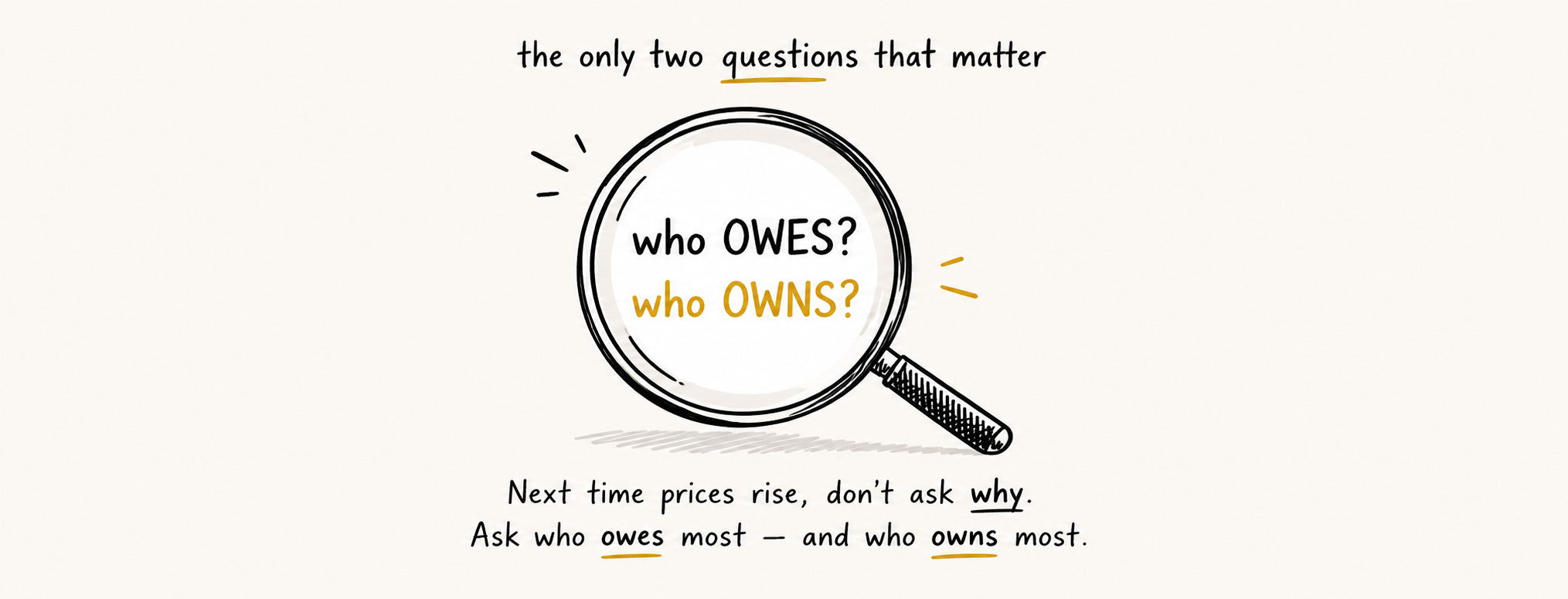
So heres the mental model to keep. The next time prices rise and everyone around you is asking “why is this happening?” ask a sharper question instead. Two of them, really:
Who owes the most? And who owns the most?
Because those two questions point straight at the people quietly benefiting: the debtors whose debts are shrinking, and the owners whose assets are swelling. Follow the debt, follow the assets, and you’ll find the winners every time - long before the headlines ever name them.
And then do the only sane thing with that knowledge: stop being a pure saver inside a system thats quietly designed to punish savers. You don’t have to stay at the far end of the pipe. Own things. Understand the game being played with the money in your pocket. Because the value leaving your wallet every year is going somewhere and now, at least, you can finally see where.
Thats the whole point of this place: to hand you the lens before everyone else gets one.
Keep going
How Central Banks Actually Control Inflation - meet the people holding the pump that makes all of this happen.
Your Bank Is Already Using DeFi. They Just Won’t Tell You. - where value quietly runs when people stop trusting the leaky bucket.
One Planet, 180 Currencies. Something’s Off. - the bigger story all of this belongs to.
Naked Market exists to close the gap between what’s actually happening in global finance and what eventually makes it to the headlines. If you want to understand where money is heading and who’s quietly benefiting before it becomes obvious, subscribe and we’ll keep going.
- more soon.
Very nice your writing 😊