


New here? Start with the post the whole publication grows out of → One Planet, 180 Currencies. Something’s Off.
Everyone argues about inflation. Almost nobody stops to explain what it actually is.
So here it is - the whole thing in about three minutes. No jargon. No graphs you need a degree to read. Just the real thing, in plain words.
And we start by throwing out the definition you’ve been handed your whole life: that inflation means “prices going up.”
It doesn’t. Not really. Thats the symptom. Not the thing itself.
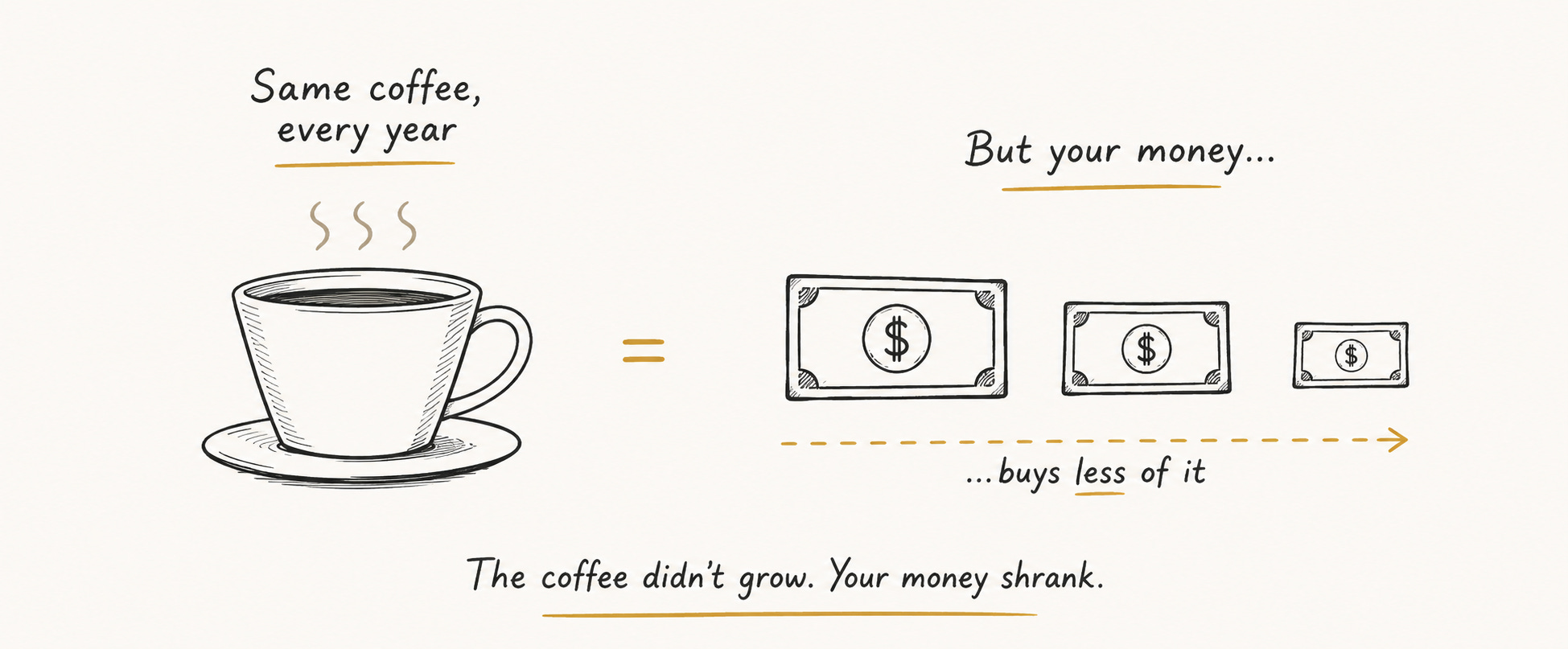
Look closely at this. Your morning coffee costs more than it did a few years ago. But the coffee hasn’t changed at all. Same beans. Same cup. Same everything. So if the coffee is identical, and the number on the menu went up... what actually changed?
Your money did. It got smaller. It buys less of the exact same thing it bought before.
And thats what inflation really is. Not the world becoming more expensive - your money quietly losing its value. We measure our whole lives in money, so we just assume the world is getting pricier. But a lot of the time, it’s the ruler thats shrinking.
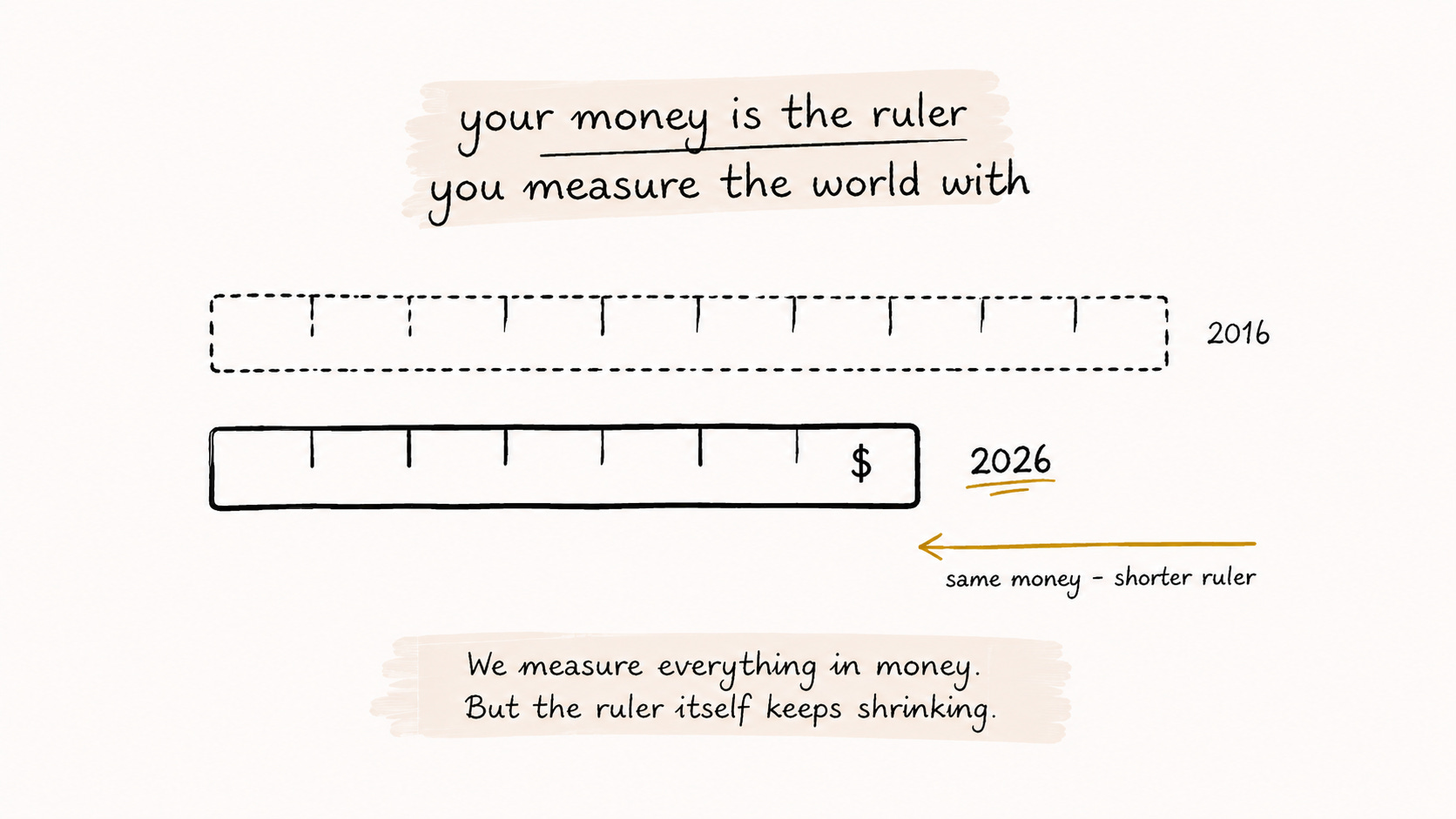
Ok, so why does the ruler shrink? Heres the entire answer in one sentence, and its almost insultingly simple:
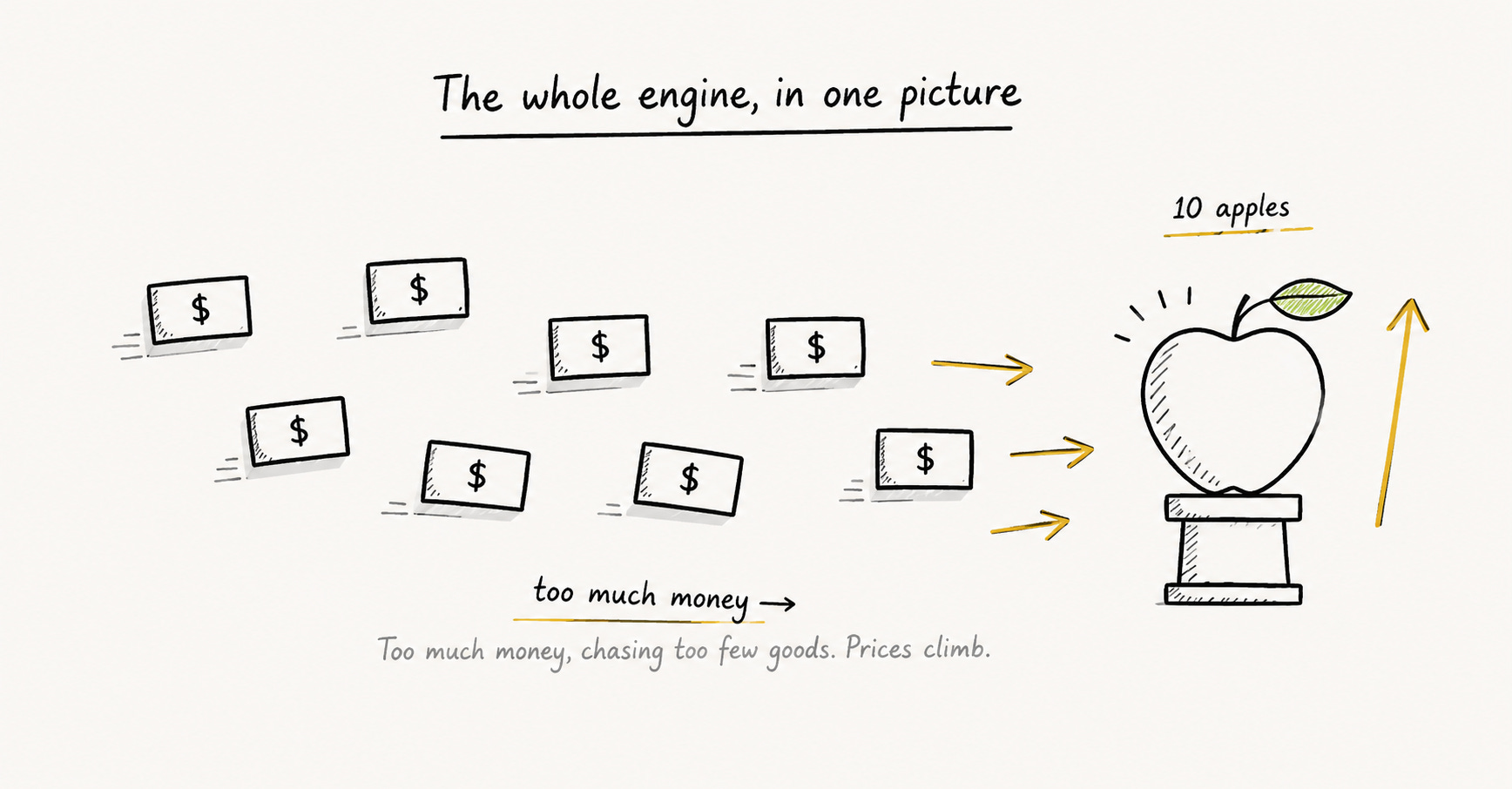
Too much money, chasing too few goods.
Picture a tiny island. It has 10 apples and 10 coins. Naturally, an apple costs about one coin. Now imagine 10 more coins fall from the sky overnight — but there are still only 10 apples. Suddenly everyone’s waving twice as much money at the same ten apples, and the price drifts up to two coins each. Nothing about the apples changed. There’s just more money fighting over them.
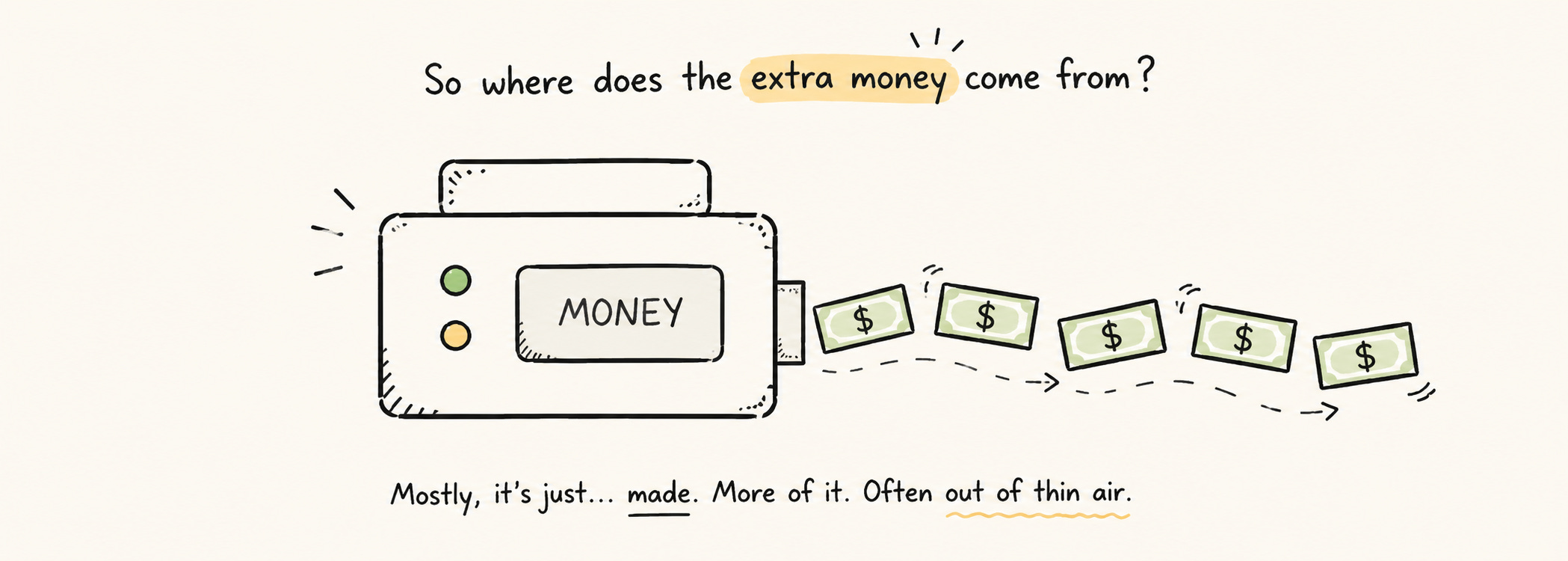
Which leads straight to the obvious question - where do all those extra coins come from?
Mostly, they’re created. Central banks and governments can bring brand-new money into existence, more or less out of thin air. A little of this is normal, even healthy -economies grow, and they need a bit more money to run on. But too much, too fast, and you get the apple problem. Everywhere. All at once.
And now the part almost nobody says out loud - the part that makes this whole thing worth understanding in the first place.
Inflation is a tax. A silent one. One you never voted for.
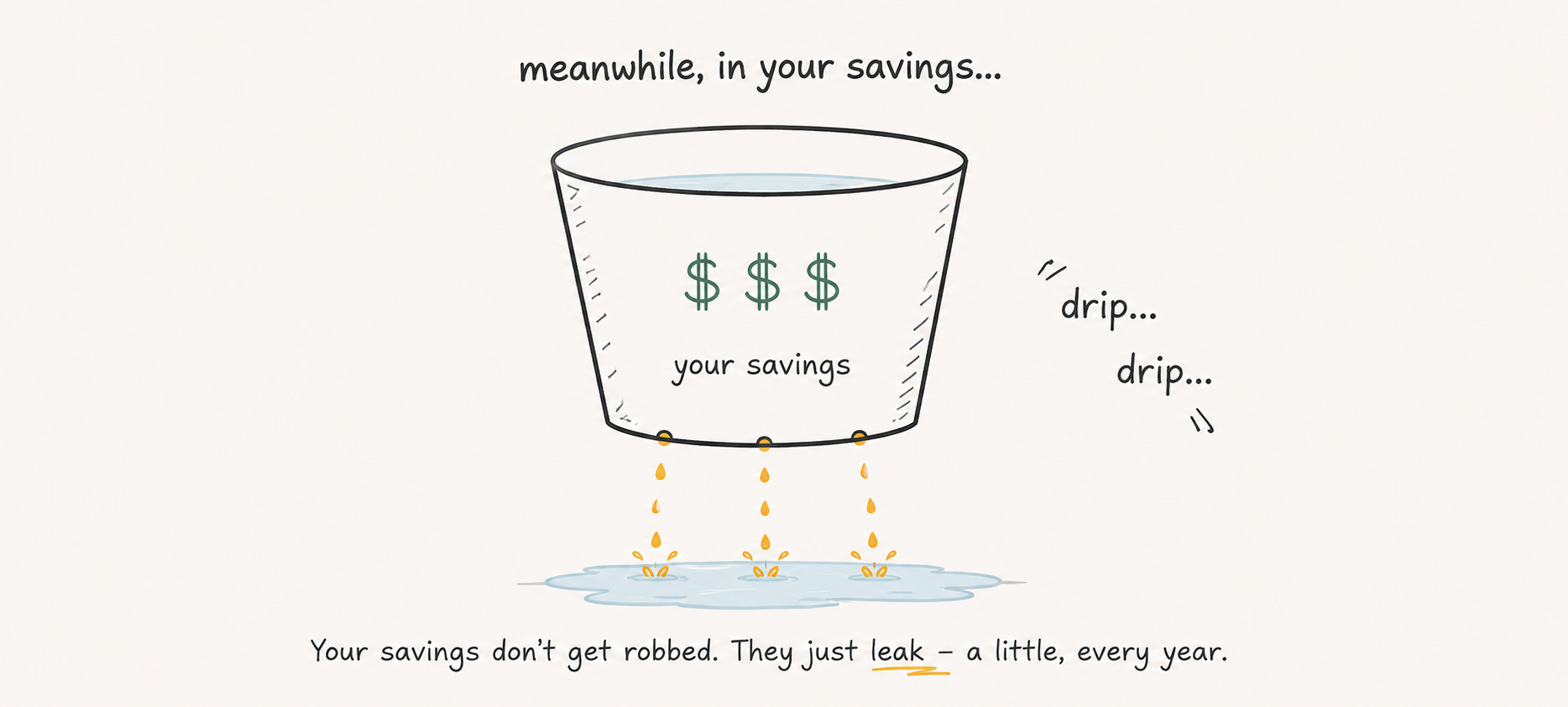
Every bit of money you’ve saved loses a little value every single year, whether you agreed to it or not. It isn’t stolen in some dramatic heist. It just... leaks. Quietly. And the value that leaks out of your pocket doesn’t vanish into nothing - it moves. Toward governments, whose enormous debts get lighter as money loses value. And toward whoever gets their hands on the freshly-made money first.
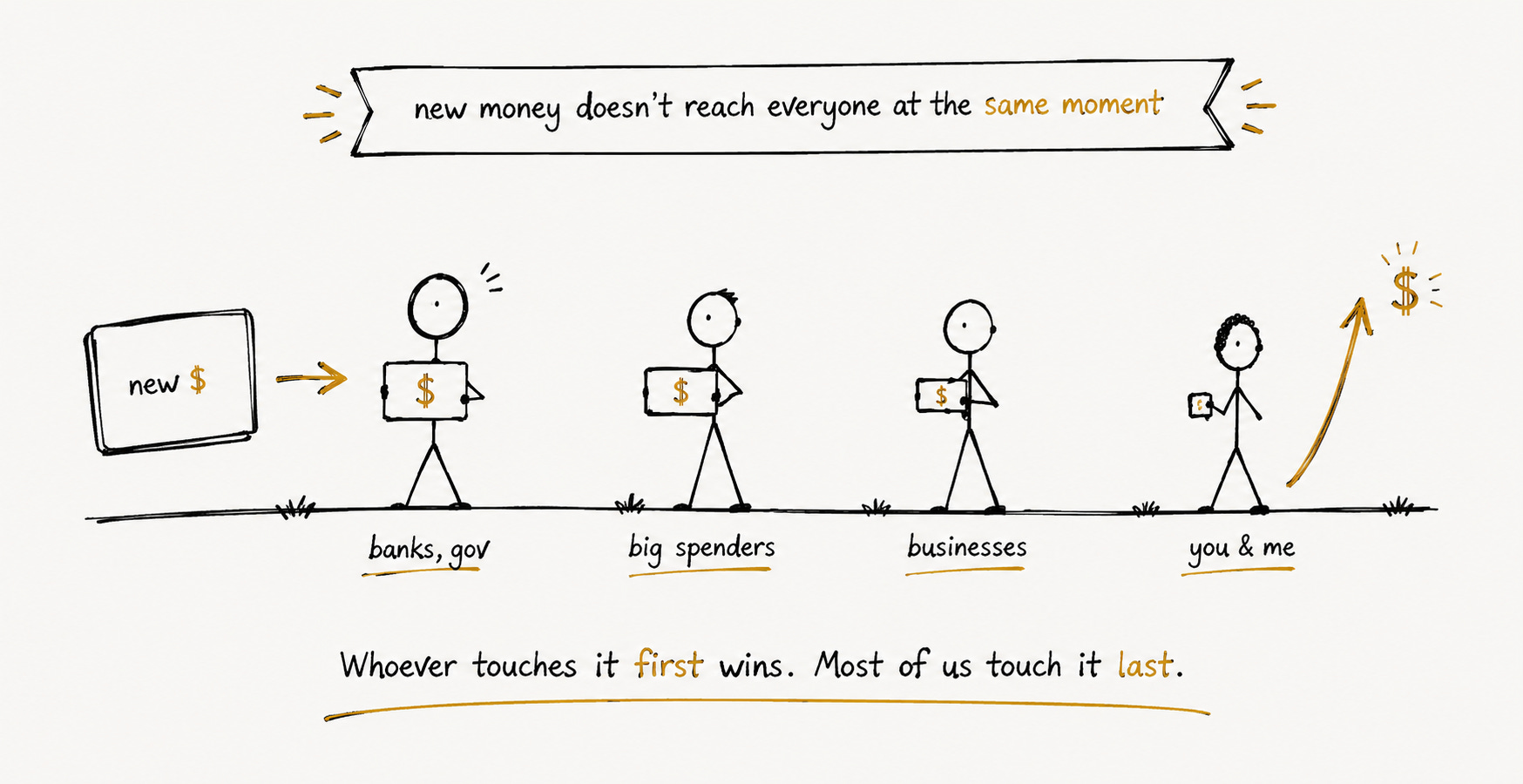
Because heres the quiet trick of the whole thing: new money never reaches everyone at the same moment. The first hands to touch it - big banks, governments, people who already own assets get to spend it while prices are still low. By the time it finally trickles down to your wages and your savings account, prices have already risen to meet it. You get the same money, late, and worth less. You were just standing further back in the line and nobody ever told you there was a line.
Alright. Enough of the bad news. Let me hand you something you can actually use - a tiny tool to keep in your back pocket forever.
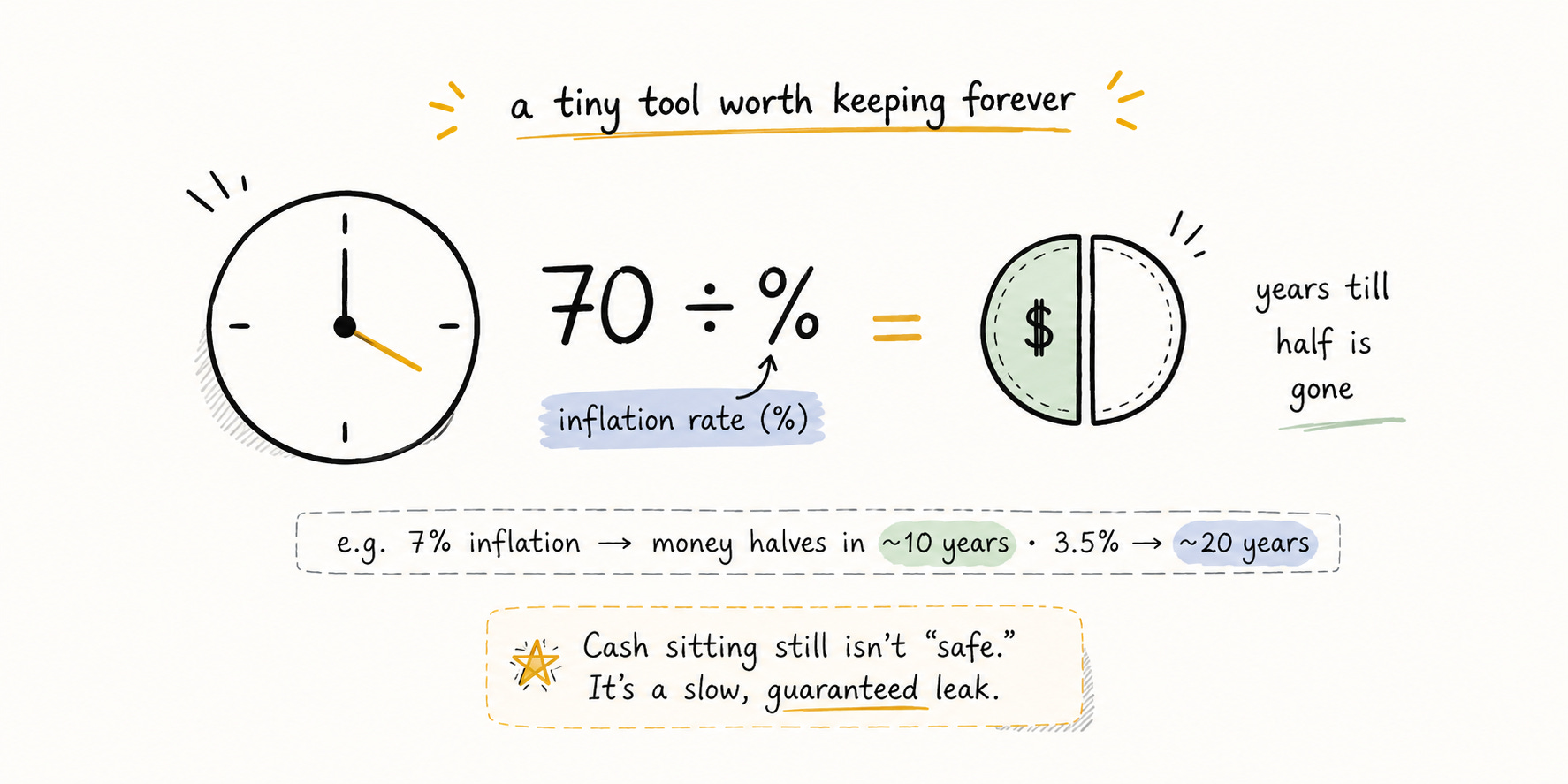
Take the number 70, and divide it by the inflation rate. Thats roughly how many years until your money is worth half of what it is today. At 7%, your savings halve in about ten years. At 3.5%, about twenty. Which means cash, just sitting there doing nothing, isn’t the “safe” choice everyone assumes it is. It’s a slow, quiet, guaranteed leak.
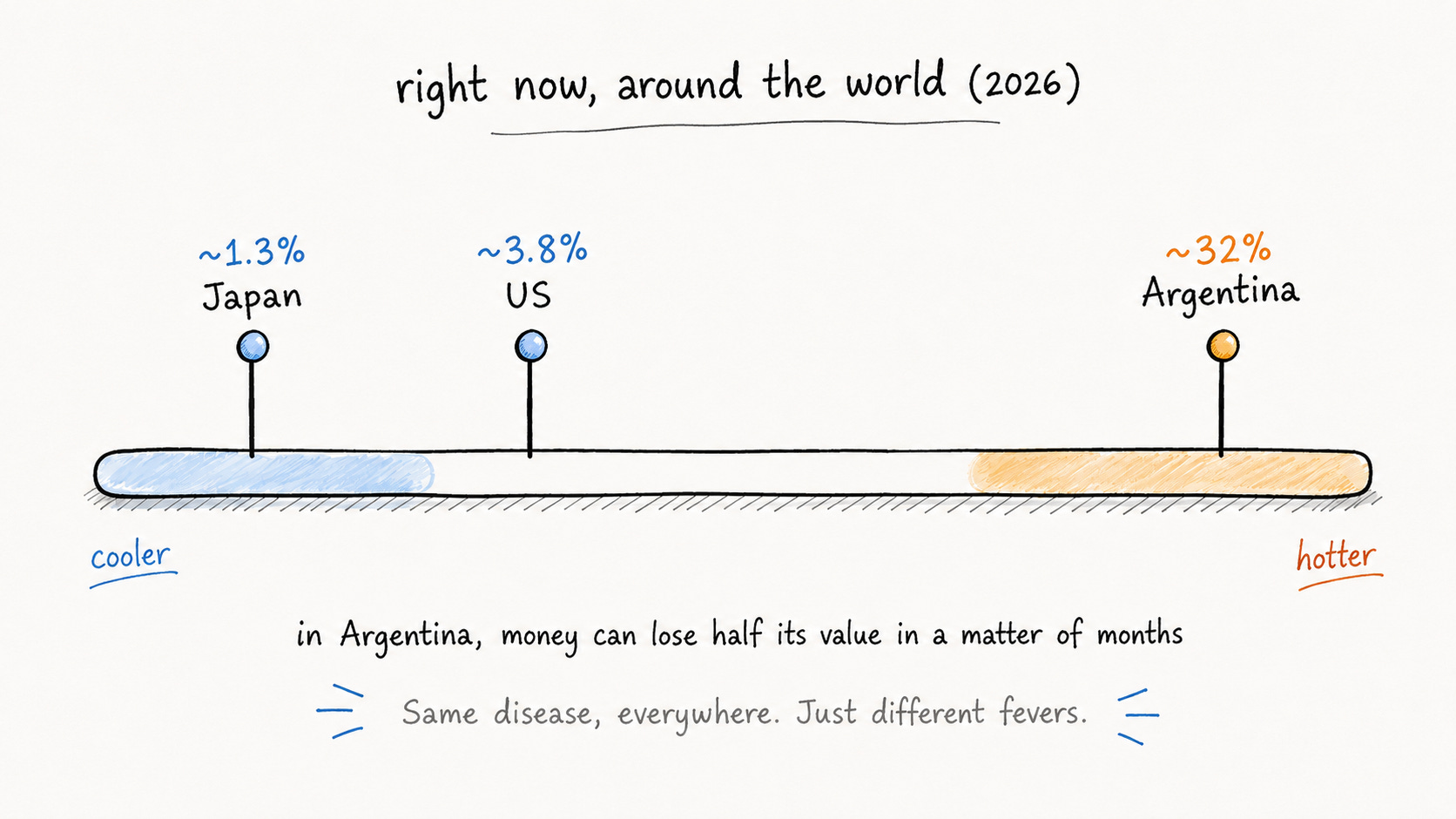
And none of this is rare, or far away, or somebody else’s problem. It’s happening everywhere, all the time - just at wildly different speeds. As I write this in 2026, inflation runs from barely over 1% in Japan, to around 3.8% in the US after a sudden oil shock, all the way up to roughly 32% in Argentina where money can shed half its worth in a matter of months, not decades. Same disease. Very different fevers.
So the next time someone tells you “prices are going up,” you’ll quietly know the truer way to say it: the money is going down.
And once you can really see that - once you stop measuring your life with a ruler thats quietly shrinking in your hand - a much better question starts to form. Not “why is everything so expensive?” but: “where can I actually keep my value, so it doesn’t just leak away?”
That question is the door. And almost everything we write here lives on the other side of it.
Keep going
How Central Banks Actually Control Inflation - if inflation is your money shrinking, this is who’s holding the pump.
Your Bank Is Already Using DeFi. They Just Won’t Tell You. - where value quietly moves when people stop trusting the leaky bucket.
One Planet, 180 Currencies. Something’s Off. - the bigger story all of this is part of.
Naked Market exists to close the gap between what’s actually happening in global finance and what eventually makes it to the headlines. If you want to understand where money is heading before it becomes obvious, subscribe and we’ll keep going.
- more soon.